Saturday, April 30, 2011

Pareu Night

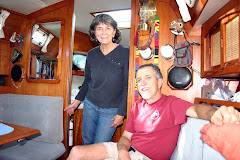
Besides the daytime activities, the Aranui had several evening events to entertain us. Tonight was “Pareu Night,” during which we would learn to arrange the signature clothing for both men and women of Polynesia. My initial expectations were not high, but once again Manaarii proved more than worthy of his role as activities director. This time, he showed off his impressive skills as a comedian. I didn’t record any video, unfortunately, so pictures will have to suffice. As they say in text, LMAO!


Puamau, Hiva Oa (aboard Aranui)

Another day, another island. This would be the pattern aboard the Aranui for the next week. The ship would move during the night, and we would have a new destination outside our window each morning. Today we returned to Hiva Oa (the second time for Aranui, the third time for us), but this time to the north shore, the opposite side from Atuona.

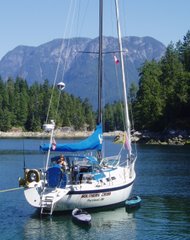
Puamau is important to visitors because of its archeological site, bearing some of the largest tikis in Polynesia. Its only an indifferent anchorage, and there was but one yacht sharing the harbor with us.

Once ashore, we had a brisk, half-hour, uphill walk to reach the ancient tikis


and piles of stones called mae’ae (compare to “marae” in Hawaiian).

As at Easter Island, one of the mysteries is how (and why) these people, without much technology, had moved such large heavy stones significant distances over extremely rugged terrain.

Part of the beauty of this site was the majestic forest that now surrounded it, and the lovely view of mountains and sea.

Friday, April 29, 2011

return to Fatu Hiva aboard Aranui

Back aboard the Aranui, we marveled at our changed circumstances. After having shared a cramped berth and head for the past 36 days, we now had a private cabin with fresh linen, a desk, television, air conditioning, and a private bath with a commodious shower.

After a month of impromptu (yet tasty) lunches on Evergreen, mostly eaten on our laps, we now sat down to a 3-course formal meal accompanied by wine, and surrounded by guests of at least 4 other nationalities. After lunch, we investigated our new surroundings. Although it's a small ship (350 feet or so), the Aranui is equipped with a pool, fitness center, library, shop, and several bars. At every turn, we were greeted by super friendly, helpful (and very attractive) Polynesian crew members. I kept expecting to wake up from this pleasant hallucination!

After watching the ship depart from the small harbor at Hiva Oa, we were heading back down to our cabin for a snooze when we heard the sound of many voices singing. We followed the joyful noise to a lounge area where our new buddy Manaariii, who turned out to be the activities director, was leading a group of about 30 in Tahitian dancing and singing. We tried to follow along, but we had already missed the first 5 lessons, and decided that it was probably going to take too much work to catch up.

Few people visit the Marquesas – the current estimate is about 3500 a year. Fewer still make it to Fatu Hiva, the most remote of the populated islands in the archipelago. So we must be among a very few who have actually been there twice! Yes, this was to be our first destination after boarding the Aranui in Hiva Oa. I was a bit sorry that we were spending so much money to see something we had already seen. I needn’t have worried.

Although it does carry up to 140 tourists, the Aranui is a true freighter, carrying goods of all kinds from Tahiti to the Marquesas, and returning with the copra, noni, and fresh fruit produced in these remote islands. At any given stop, you might see the cranes loading or unloading outrigger canoes, cars, cows, or Coke. The arrival of the Aranui, approximately every 3 weeks, is a big deal, and everyone turns out to greet her.

We were ferried to the Omoa wharf in outboard-powered barges. Once ashore, we saw a couple of things we had missed during our first visit here. We were taken to a palm-thatched shelter to see a demonstration of island crafts. First we were shown how tapa cloth is made, from the bark of several local tree species.

Next we were shown the art of arranging flowers, leaves and roots into fragrant bundles that are tied into women’s hair for special occasions. Everything used in the arrangement was first passed around, and the aromas were just incredible! These lovely scents are some of our strongest memories of Polynesia.

We were ferried back to the Aranui for lunch, and while we were eating the ship moved 3 miles along the coast to Hanavave. We had met only a few of the inhabitants here last week. This time, as we came ashore, most of the village was there, in traditional garb, dancing and serenading us with ukeleles, drums, and song.


Back on the boat, we attended a very interesting lecture on both the history of the indigenous people of the Marquesas, and a recap of the mostly sad events since European contact. After this first full day aboard, we could see that a significant benefit of visiting the islands as an Aranui passenger would be seeing, and learning about, much more of the local culture!

Thursday, April 28, 2011

return to Hiva Oa

After 4 very nice days at Hana Moe Noa, Evergreen returned to Atuona, in order to resupply and to disembark its extra crew. Can you imagine having houseguests for more than a month? Me neither! So although originally it had been agreed that we could continue aboard Evergreen for a month, or even two, after arrival in French Polynesia, it came as no real surprise when we realized that the time had come to sign off the crew list and embark on our own adventures. We had heard a lot of stories of crew relationships that had not turned out as originally expected, and sadly we had become part of yet another example. Enough said.

We wanted to continue traveling by sailboat if possible, but we couldn’t turn up any vacancies among the boats we had encountered in Tahuata and Hiva Oa. Clearly we were going to have to spend a lot more money at this point, traveling by air and staying in hotels or guest houses. However, beyond purely financial considerations, we had already invested a lot of time and effort to reach this part of the world, and we wanted to see the northern Marquesas and at least one of the atolls in the Tuamotus before flying home from Papeete. Were there any other options?

Turns out there was at least one – a combination cruise ship and interisland freighter called the Aranui. Judging from their website, you could only book a 2-week passage beginning and ending in Tahiti. However, our guidebook said that they would carry interisland passengers, space available. The Aranui pulled into Hiva Oa the night after we returned, so early the next morning I paddled the kayak to the boat ramp and walked over to the Aranui’s gangplank.

Once aboard, it was a short walk to the reception desk, where I was told that there was indeed space available, and that at least several other sailors had also been asking. I hurried back to Evergreen and brought Vicki along for a more serious look. Although the Aranui would no longer carry tourists on deck class (only locals qualified for this discounted passage), they would let us rent a vacant cabin. The handsome young man on duty was incredibly friendly and helpful. Manaarii (Tahitian for royal power) turned out to be one of our best friends on the staff and he certainly played an important role in our decision. After seeing the cabin and getting a rough estimate of the cost (final pricing approval needed to be obtained from the head office in Papeete), we agreed to sign up.

Tuesday, April 26, 2011

Tahuata


We've been anchored for the past 3 nights at Hana Moe Noa, which Eric Hiscock described as one of the 3 most beautiful anchorages in the South Pacific. There is only one other US boat here, the others are from Austria, England, France, Holland, Italy, and yes, even Luxembourg! There is a nice coral sand beach where cruisers go to watch the sunset (and each sunset has been spectacular so far).

Behind the beach, there is a deserted farm where we can pick coconuts, lemons, and pamplemousse (like a grapefruit, only sweeter).
We snorkel at least twice a day along the convoluted, lava-rock coastline on either side of the bay, accompanied by reef sharks, giant mantas, tunas, dolphins, and myriad small reef fish.

John from s/v Calou and I kayaked a few miles to the Bordelaise Channel, which separates Tahuata and Hiva Oa by only a couple of miles.

Yesterday, a boatload of locals came to hunt wild goats in the hills above the bay, and offered to sell us fresh goat meat when they were finished. We passed.

Today we dinghied a few miles down the coast to Vaitahu, where the first European explorer, the Spaniard Mendana, anchored over 400 years ago (and slaughtered 75 local inhabitants during his brief stay). We visited a beautiful stone and wood church, but the small museum was closed, and we couldn't find the most famous tattoo artist in the Marquesas. We made lunch from fresh baguettes and windfall mangoes, then dinghied back to the boat.


a small miracle

After a day of rain (except for the morning in which we had snorkeled) everyone was feeling a bit of cabin fever. John on Calou came to the rescue by offering to give an informal recital. He's a concert violinist in San Francisco, so this sounded like a wonderful treat. Phambili offered to host everyone. When we arrived, Dennis let Fiona tie up Evergreen's dinghy, using the tried and true half hitches that most of us use.

After a wonderful potluck dinner, it turned out we got a bonus act for the evening. John wasn't quite ready to play yet, so Bruce brought out his button accordion, and accompanied by his wife Pascale's vocals, belted out a wonderful selection of gypsy, Russian, and French tunes. After this warmup, John performed a few pages from a number of classical "hits" including violin concertos from Mozart and Beethoven. It was pretty amazing to hear such music while seated under the tropical sky on a gently rocking catamaran.

As the evening wrapped up, we said our goodbyes, not knowing when or where we might meet up again. Fiona went to get our dinghy, only to find that it had disappeared. This was serious. A dinghy is like a car, only much more of a necessity - there is no "public transit" in an anchorage. Fiona and Tommy immediately went out to search, but the sky was clouded over and the moon hadn't yet risen.

The prevailing feeling was that there was nothing to be done, but Dennis decided to raise the anchor and go out looking. By this time it was after midnight. He used his chartplotter and instruments to determine wind and current direction, and motored out in the direction that the dinghy might have drifted. But it seemed hopeless - the dinghy had up to a 4-hour headstart.

When I came on watch at first light, we were in big swells and high winds, nearly 8 miles offshore. The chartplotter showed where Dennis had tracked back and forth across the sea. Finally, about 8AM, he called off the search and laid a course back towards Hanavave. I went below and tried to sleep. An hour later, Vicki awakened me with the amazing news that the dinghy had been spotted, directly in front of the boat, at a distance of no more than a couple hundred yards.

We grabbed the dinghy's painter with the boathook, and because of the heaving seas, decided to tow it back to calmer waters. When we got back to the anchorage, all of the boats that had been there were gone, and a new arrival, Thetis from Holland, had taken their places. We had a celebratory breakfast, and slept away most of the day. Of course, the sun came out and we missed a glorious day, compared to the two previous ones. Toward evening we rallied for a short trip into the village to buy a few pamplemousse.

Fatu Hiva 2


Thursday dawned calm and clear, so I hopped in the kayak at first light and paddled around the bay at Hanavave. Its really a remarkable setting, with cliffs rising nearly vertically from the sea, and yet covered with palm trees, ironwood trees, and other unfamiliar vegetation. There were only two small spots at which I could land the kayak, so I soon headed back to the boat and swapped out the kayak for snorkeling gear. Vicki accompanied me.

Now we're talking! This is why I wanted to come to the South Pacific. Even with all of the runoff from the recent heavy rain, visibility is at least 40 feet, and the water is a remarkable deep blue color. The first fish we saw was a 5' long whitetip reef shark, which continued on its way without as much as a glance in our direction. Soon we had reached the edge of the bay, and were surrounded by a psychedelic array of reef fish, mostly under a foot in length, with an extraordinary variety of colors and patterns. Other than Moorish idols, we only recognized a few as similar to the fish in Mexico. There are no coral reefs on this volcanic island, but corals and sponges grow thickly in places, on the boulders and cliffsides that form the boundaries of this underwater realm. Soon we spotted a large, speckled moray eel, and soon after that, a sea turtle. We continued our circuit around the perimeter of the anchorage. After awhile, we retraced our path, reluctant to cross the deep center of the bay. But there was no need to worry, we never saw another shark.

The highlight of the dive came as we were passing close by the large French catamaran, Charade. Below and to one side was a manta ray, just hanging out. This was only a modestly sized manta, about 5 feet from wingtip to wingtip (they can grow to over 20 feet). It was not at all shy, and allowed me to make several close approaches as it glided back and forth near the catamaran. The captain told me that it was there every day since they had arrived.

We finally decided it was time to head back to the boat. Thankfully we had gotten up and done this early in the day, because before long, the rain resumed with the same intensity as the day before, and the bay turned chocolate brown.